

IN PARTNERSHIP WITH

Trump's Urgent Warning: The Digital Dollar Is About To Go Live
Just last year, president Trump made the announcement he will never allow a Central Bank Digital Currency.
He warned us:
"A CBDC would give the federal government absolute control over your money."
And here's the scary part…
With a CBDC the government would have unchecked power to:
Track every dollar you spend
Stop you from buying goods
Freeze your account on demand
This is the most control the government has ever had over your lives.
CBDC is about to go live, any day now…
And if you don't protect yourself, you may lose your financial freedom instantly.
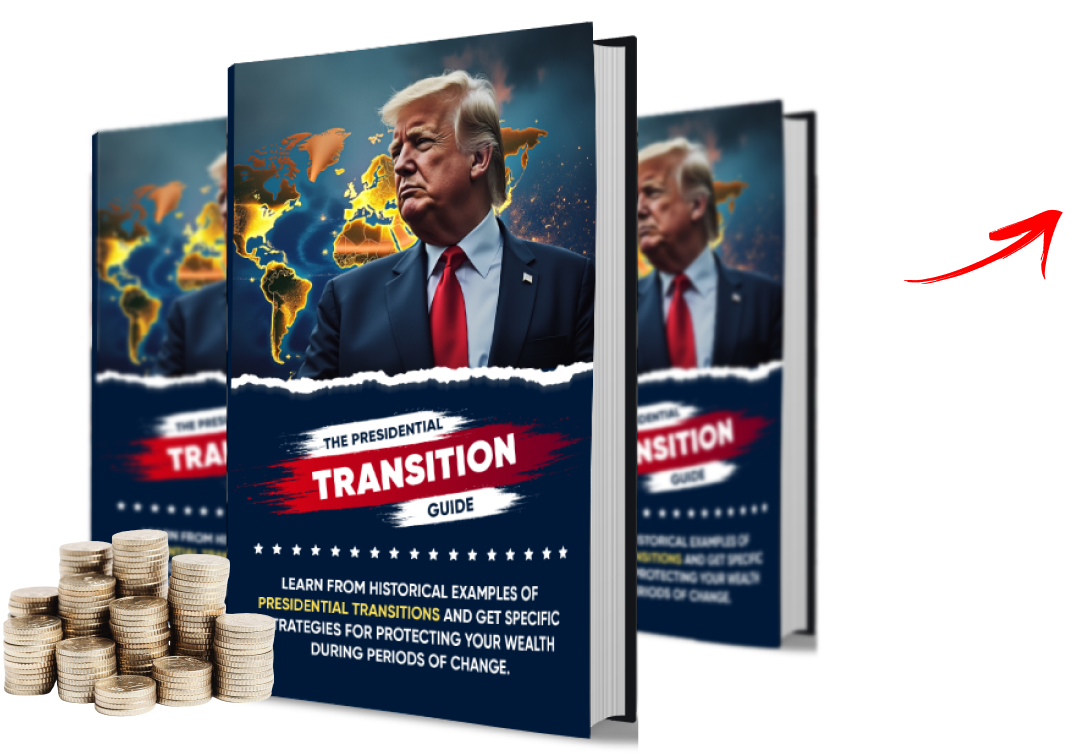
👉 That’s why we assembled this important guide to show you exactly how to legally opt out, and protect your cash and privacy.

But act fast…
Once CBDC becomes the law of the land, you won’t be able to opt out.
Trump is trying to stop it. Until then, it’s up to you.

We have arrived, quietly and without ceremony, at a strange new arrangement: the money we spend now watches us. Every transaction now leaves a portrait of who we are — finance no longer records, it observes.
The Age of Transparent Value
By October 2025, the transformation is nearly complete. Across the euro area, instant payments settle within ten seconds, 24 hours a day. Every transaction carries with it a layer of verification: the payee's name must match the account number, compared in real time before the payment clears. This is presented as protection—a shield against fraud and human error. And in many ways, it is. But it is also something else: a shift toward a financial architecture where visibility is no longer optional, but structural.
Tokenization has accelerated this shift. Assets that were once held in quiet, paper-backed anonymity are now represented on programmable ledgers—bonds, deposits, equities, even real estate. These tokenized assets do not simply exist; they perform. They automate compliance, trigger conditional payments, and generate real-time audit trails that supervisors can inspect at will. The Bank for International Settlements speaks of a "unified ledger," integrating central bank reserves, commercial deposits, and government bonds into a single transparent system.
|
Visibility as the New Collateral
The economics of exposure have also shifted. Data is no longer a byproduct of finance—it has become its raw material. Credit scoring models now consume not just payment history, but behavioral patterns: utility bills, mobile wallet usage, even the timing and frequency of digital transactions. Machine learning algorithms detect correlations invisible to traditional methods, extending credit to populations once deemed "unscorable". This is framed as inclusion, and in many cases it is. But inclusion on these terms carries a cost: to participate is to be visible. To be creditworthy is to be known.
|

When Money Starts to Think
Programmable money extends this logic further. Funds can now be issued with expiration dates, geofenced spending zones, or conditional triggers that release payment only when predefined milestones are met. China's digital yuan has been issued with time limits to encourage spending; Sweden's Riksbank has piloted milestone-based disbursements. These are not proposals. They are live systems. Money, in this context, is no longer a neutral medium. It is a policy instrument, embedded with intention and oversight.
The infrastructure is maturing rapidly. By 2025, financial institutions are projected to spend $64 billion on AI technologies that personalize services, detect fraud, and predict behavior. Real-time transaction monitoring is now the norm, not the exception. Sanctions screening, once conducted transaction-by-transaction, is now performed continuously at the customer level, updated multiple times per day as global lists shift. The system moves faster than human review, and its logic is often opaque, even to those who deploy it.
Others, facing a different kind of pressure, look for flexibility within the visible system itself.
Partner Resources:
▶ Billionaires & Congress Are Quietly Piling Into This One Sector
(by BEHIND THE MARKETS)
▶ Caught on Video: Why This Cybertruck Clip Has Millions Talking
(by BROWNSTONE RESEARCH)
▶ The Video Musk Showed Trump — Now You Can See It
(by BEHIND THE MARKETS)
Continuity as Currency
Perhaps the most profound shift is not technological but philosophical. For centuries, money has been synonymous with a kind of freedom—the freedom to choose, to transact anonymously, to move through the world without leaving traces. That assumption is eroding. The financial system of 2025 operates on a different premise: that transparency is security, that visibility is trust, and that observation is the price of participation.
There are genuine benefits to this new order. Fraud is harder. Compliance is faster. Financial services reach populations that legacy systems excluded. But there is also a quiet trade-off, one that is rarely named: in a world where every transaction is recorded, analyzed, and predicted, spending becomes a form of self-disclosure. The question is not whether this system is here—it is—but what it means to live within it.
The rarest wealth today may be what remains unseen.
Deniss Slinkins,
Global Financial Journal
