

Calm markets often hide what matters most. As October fades into November 2025, the surface appears eerily placid: the VIX hovers just above 17, the yield curve has un-inverted to a modest 53 basis points, and equity indices continue their methodical ascent. Yet beneath this veneer of calm, seven critical indicators flash warning signals that traditional volatility measures fail to capture—echoes of structural strains that preceded both 2008 and 2020.
IN PARTNERSHIP WITH AMERICAN ALTERNATIVE ASSETS
Here’s the hard truth: Market patterns can be misleading.
Stocks can rise right up until the edge of a cliff, just like they did in 2008.
Most investors never see it coming because they’re watching the wrong signals.
But a small group of “in‑the‑know” analysts have always tracked the same 7 indicators, and they’ve predicted every major collapse since 1929.
Those signals are now flashing red again.
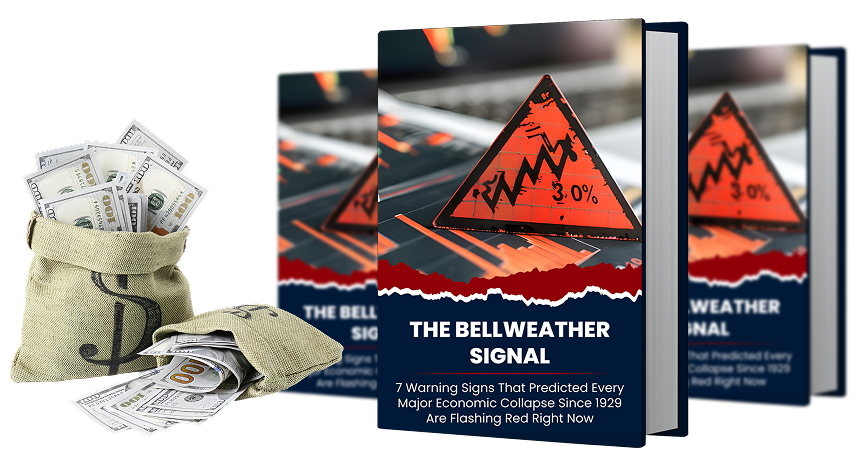
That’s why we’re giving you free access to The Bellweather Signal, the only report that reveals these underground metrics and explains what to do about them.
And inside, you’ll see how Americans are using gold and silver to turn their IRAs into a fortress instead of a target.
History doesn’t repeat exactly, but it rhymes. And right now the rhyme is loud and clear.
Don’t wait for the headlines.
Get the indicators before the crash, not after.
The Calm That Deceives
The paradox is straightforward: VIX and momentum gauges measure expressed fear, not latent risk. They tell us how investors feel, not what balance sheets reveal. Credit spreads, having tightened to the lowest quintile in historical data at just 78 basis points by late October, suggest either supreme confidence or profound complacency. Investment-grade spreads remain compressed even as corporate America carries record leverage, creating a dangerous mismatch between perceived and actual fragility.
Signals Beneath the Surface
The yield curve's recent normalization—positive for the first time since 2022—appears reassuring until one examines what it conceals. While the 2s/10s spread has widened from deeply inverted territory, longer-dated yields remain elevated relative to near-term rates, reflecting persistent fiscal concerns rather than genuine optimism. This steepening owes less to growth expectations than to mounting anxiety over sovereign debt sustainability, particularly as the U.S. deficit trajectory exceeds 7% of GDP.
|
Liquidity and Leverage: A Dangerous Pairing
Margin debt has climbed to over $1.1 trillion, up nearly 40% year-over-year, signaling investors have borrowed aggressively into this rally.
When leverage peaks while spreads stay compressed and volatility muted, history suggests the system is primed for a break—not continuation.
Recent filings show a sharp rise in insider selling across sectors, often near record valuations. Executives tend to move before the data does, and their actions hint at quiet caution behind public optimism.
Liquidity tells the same story. The U.S. personal savings rate has fallen to 4.6%, nearly half its long-term average, leaving households stretched just as real income pressures persist.
The IMF recently warned that
“stretched valuations and mounting pressure in sovereign bonds raise the risk of a disorderly correction.”
Amid these crosscurrents, some investors have quietly diversified into tangible assets. Gold and silver held within IRAs have gained traction as a defensive hedge — a small but telling signal that volatility measures have yet to reflect.
Partner Resources:
▶ Billionaires & Congress Are Quietly Piling Into This One Sector
(by BEHIND THE MARKETS)
▶ Cover all your expenses with just $118,000 invested?
(by INVESTORS ALLEY)
▶ Top Five U.S. Banks Preparing for Massive Change to Checking &Savings Accounts?
(by BROWNSTONE RESEARCH)
Awareness Over Anxiety
The lesson is not to panic but to observe with discipline. Markets reward the attentive, not the anxious. Awareness of these seven deeper signals—credit spreads, yield curves, leverage, insider behavior, liquidity, margin debt, and savings flows—constitutes the essential work of prudent allocation. Silence in the markets is rarely permanent. Those who listen closely will hear what others chooseothers choose to ignore.
Deniss Slinkins,
Global Financial Journal
